
Don’t Just Sit There: How to Move More During Your Work Day
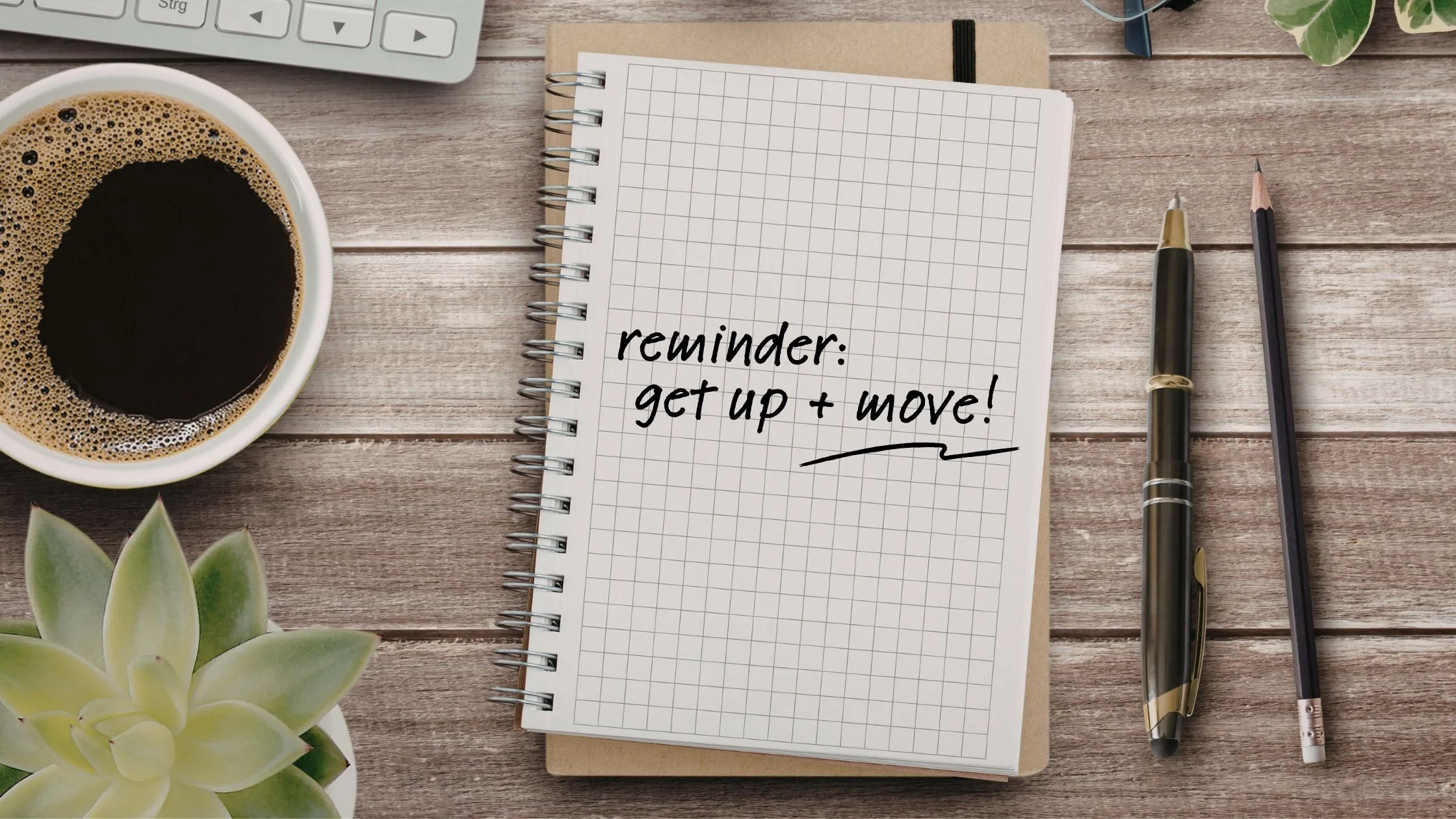
How to Stay Healthy and Energized at Your Desk
If you sit most of the day for work, you’ve probably felt it — the stiff hips, the tired legs, the afternoon brain fog that even your second (or third) cup of coffee can’t seem to shake.
When your job keeps you at a desk for hours, it’s hard to get up and get moving — but you don’t need a full gym session in the middle of your workday to feel better. Even five minutes of gentle movement a day can help you improve your energy, focus, creativity, and overall well-being.
Let’s look at why getting up from your desk matters (and how you can make your favorite part of the workday).
You’ll Feel More Productive
Many people avoid stepping away from their desks because they worry about falling behind, but research comparing exercise days to non-exercise days found that people experienced:
Better moods
Improved performance
Greater ability to handle their workload
And here’s the important part: these improvements happened regardless of how intense the exercise was — even a short walk or a quick stretch can make you feel more capable when you return to your desk.
Movement Is an Energy Boost
When the afternoon slump hits, it’s tempting to reach for caffeine. Now, we love a little pick-me-up, but light to moderate exercise can significantly increase energy levels and reduce fatigue.
In one study, sedentary adults who exercised three times per week for six weeks reported:
A 20% increase in energy
A 65% decrease in fatigue
Even something as simple as a short walk around the building can help you feel more alert than another cup of coffee (Not that we’d keep you from having one!).
Improve Your Mood and Prevent Burnout
Long-term research has shown that workers who don’t exercise experience higher levels of depression and job burnout, and those with higher physical activity levels report lower rates of both.
If you’ve been feeling mentally drained or stuck, movement may help more than powering through. In fact, short bouts of exercise can improve memory and cognitive performance immediately after.
In another study, walking significantly increased creative output compared to sitting. Participants came up with more ideas while walking, and the creative boost carried over when they returned to their seats.
If you’re brainstorming, troubleshooting, or preparing for a presentation, try walking first. Sometimes stepping away for a moment is all you need!
The Hidden Cost of Sitting Too Long
Even if you exercise before or after work, long stretches of uninterrupted sitting can still affect your health. Prolonged sitting has been linked to increased risk of heart disease, stroke, diabetes, obesity, and other chronic conditions (even in people who work out regularly).
One study found that when participants sat for three hours without moving their legs, blood vessel function declined within the first hour. But when they took slow five-minute walking breaks every 30 or 60 minutes, there was no decline.
Other research has shown that:
Longer sitting time at work is associated with a higher likelihood of being overweight or obese
Extended sitting is linked with reduced quality of life
Among adults over 60, each additional hour of sedentary behavior is associated with greater difficulty performing daily activities
Your daily workout helps, but breaking up sitting time matters too!
Start Tomorrow With This Simple Routine
You don’t need special equipment or extra time to start incorporating more movement during your work week.
Take regular breaks: Set a reminder to stand and move every 30–60 minutes.
Walk it out: Take a short walk around the office, up the stairs, or outside if possible.
Make a swap: Replace one caffeine break with a movement break.
Try a standing desk: If you have the option, try using a standing desk for parts of the day.
Circulate and stretch: Try gentle movements like calf raises, standing hip circles, and shoulder rolls.
You don’t need a bootcamp-level fitness routine — just mindful, consistent movement throughout the day. Those small breaks can boost your energy, support your mood, and protect your long-term health.
To learn more about how you can incorporate more movement and fitness into your work week, connect with one of our personal trainers. We can help you build a fun, attainable workday workout routine that you’ll look forward to doing!