
Trainer Recommendations: How to Exercise With Osteoporosis
If you’ve been recently diagnosed with osteoporosis or you’ve suffered a fracture, it’s completely normal to want to avoid exercising. However, while it may seem contradictory, it’s more important than ever to practice exercises that keep your body strong, balanced, and flexible.
Osteoporosis is a major cause of disability and excess mortality in seniors, particularly in women around ten years after menopause. One of the best ways to help manage your diagnosis is through a bone-strengthening program.
Why Is Exercise so Important for Managing Osteoporosis?
Staying active can help improve bone density, protect your bones from another fracture, and preserve your balance and mobility, which can ultimately support your long-term independence and safety.
In a study by BMJ, seniors ages 75 and older who committed to a mix of exercises comprised of balance, functional, and resistance exercises reduced their rate of falls by 34%.
The core idea of a good fitness routine for osteoporosis is to keep your muscles strong and flexible, which can help protect your bones in case of a fall, and to improve your balance, which can help prevent falls altogether.
Helpful Guide: Learn how to safely get off the floor in case of a fall before you need it!
Manage Your Osteoporosis With Trainer-Recommended Exercises
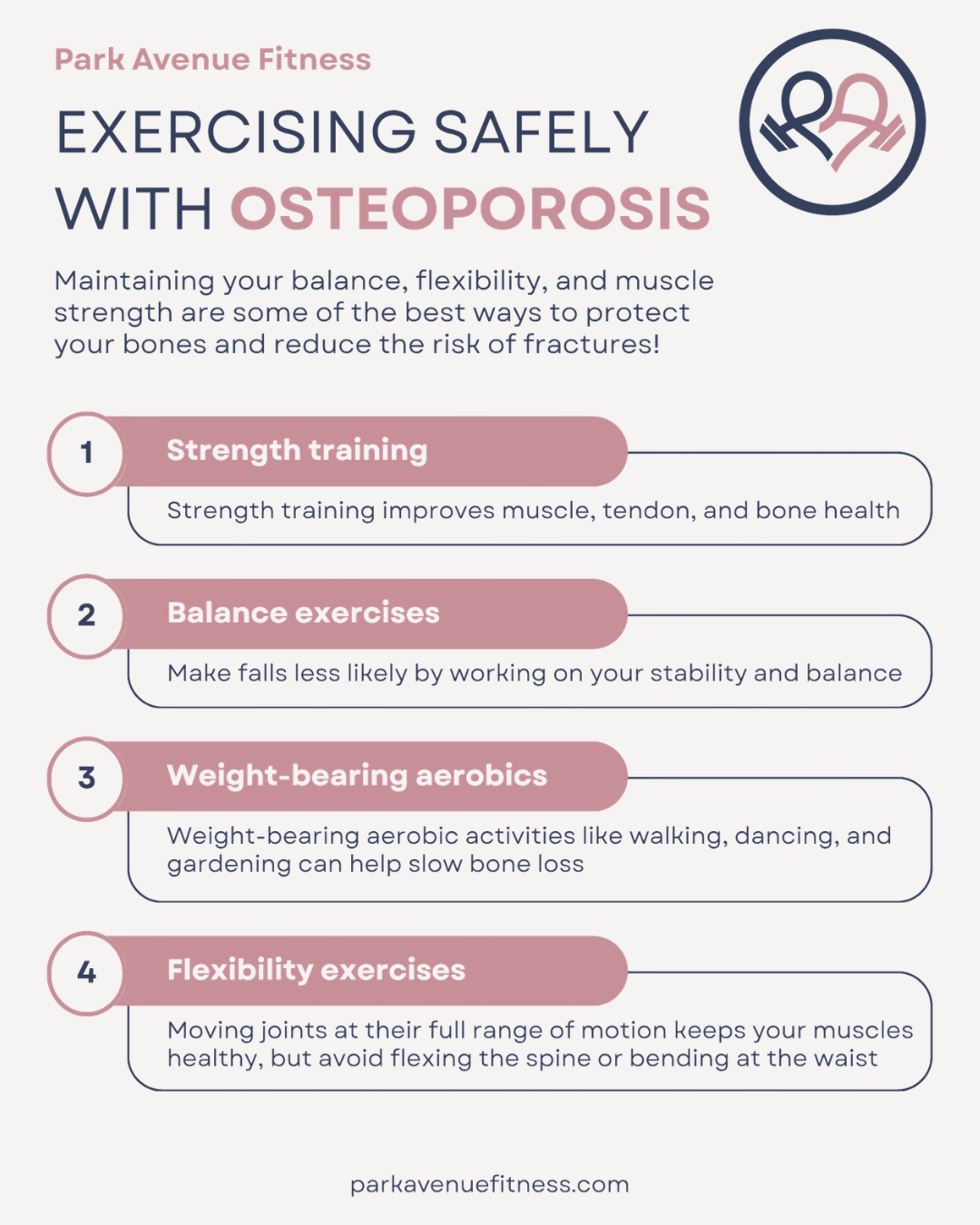
After experiencing a fracture, the likelihood of experiencing another fracture is extremely high. Maintaining your balance, flexibility, and muscle strength are some of the best ways to protect your bones and reduce the risk of fractures.
The following exercises are necessary components of a good bone-strengthening program:
Balance Exercises
Make falls less likely by working on your stability and balance at least two times a week. Balance exercises help you improve your ability to hold yourself up and reduce the risk of falling. Tai chi and yoga are great ways to improve your balance, and at Park Avenue Fitness, we also offer Balance Class and Getting Off the Floor — both of which were created to help seniors live safer, more independent lives.
Strength Training
Strength training at least twice a week improves muscle, tendon, and bone health. Strength training uses weights or your body’s resistance to work against gravity. This could look like using free weights, a weight machine, resistance bands, or simply lifting your own body weight.
Weight-Bearing Aerobics
By forcing your body to work against gravity, weight-bearing aerobic activities like walking, dancing, and gardening can help slow bone loss and help you strengthen your bones. While high-impact activities strengthen bone more than low-impact exercises, you should only work within your fitness level.
Flexibility Exercises
Moving your joints through their full range of motion with movements like stretches and yoga allows you to keep your muscles and joints healthy, mobile, and limber. Aim to stretch for between five and 10 minutes (holding each stretch for 10–30 seconds) after each workout.
As with all of these exercises, avoid flexing the spine or bending at the waist!
Trainer Tip: Although the goal is to exercise for 30 minutes a day, remember not to push yourself too hard! Active rest and recovery are an equally important part of your fitness routine.
Stay Strong and Active With Park Avenue Fitness!
Adapting your fitness routine for your bone density and osteoporosis diagnosis is one of the biggest favors you can do for yourself and your long-term health. And, if you need help getting started, a personal trainer can help set up a regimen that works for you, your body, and your experience level.
To get started, browse our classes or contact us to learn more!
Sources: